A Complete Guide to Purchasing Women’s Clothing Overstock

For entrepreneurs running physical stores, live streaming accounts, or online shops, women’s clothing overstock is a cost-effective choice to maximize profit margins. With prices as low as 30% to 50% of the original wholesale price, it can significantly reduce procurement costs while meeting diverse consumer demands. However, purchasing overstock requires professional skills—blindly buying may lead to stockpiles of low-quality goods or unsalable products. This guide summarizes practical tips for purchasing women’s clothing overstock, helping you avoid pitfalls and get high-quality goods at a low cost.
1. Clarify Your Target Positioning Before Purchasing
The first step in purchasing women’s clothing overstock is to define your target customer group and store positioning. Different groups have distinct preferences for styles, prices, and quality, which directly determines the direction of your procurement. For example, if your store targets young women aged 18-25, you should focus on trendy styles such as Korean casual wear, sweet dresses, and basic T-shirts, with moderate quality and low prices (preferably $5-$15 per piece). If your customers are middle-aged women, prioritize comfortable, loose-fitting styles and durable fabrics like cotton and linen, with higher quality requirements and slightly higher prices ($10-$25 per piece).
Avoid purchasing blindly for low prices. Even if the overstock is cheap, it will become dead stock if it does not match your target group, increasing your operational risks. It is also recommended to determine the proportion of different categories, such as tops accounting for 50%, bottoms 30%, and dresses 20%, to ensure a balanced product structure.
2. Choose Reliable Sourcing Channels
The quality and price of women’s clothing overstock are closely related to sourcing channels. Choosing a reliable channel is the key to successful procurement. Here are the most common and practical channels for your reference:
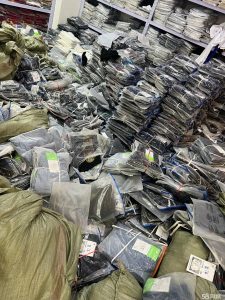
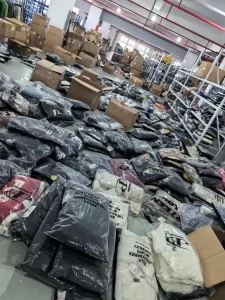
First, industrial belt source bases, such as Guangzhou Qingfeng Clothing Overstock Market, Hangzhou Sijiqing Overstock Market, and Dongguan Dalang Woolen Market. These bases gather a large number of factory direct-supply overstock, with complete categories, low prices, and the advantage of bulk purchasing (supporting wholesale by weight, box, or ton). You can inspect the goods on-site to ensure quality and avoid buying counterfeit or shoddy products.
Second, factory direct cooperation. Many women’s clothing factories will have leftover orders, overproduction, or seasonal stockpiles. Cooperating directly with factories can skip middlemen, get lower prices, and even customize styles according to your needs. However, this channel usually requires a minimum order quantity, which is more suitable for merchants with large procurement volumes.
Third,online wholesale platforms. For merchants who cannot go to the source base in person, online platforms are a convenient choice. Most platforms have detailed product descriptions, real pictures, and after-sales guarantees, and support small-batch mixed wholesale, which is suitable for new merchants to test the market. However, it is necessary to carefully check the merchant’s reputation and product reviews to avoid being deceived.

3. Master Quality Inspection Skills
One of the biggest concerns about purchasing women’s clothing overstock is quality. Many overstock products have minor flaws (such as thread ends, slight color differences, or incomplete tags), but serious quality problems (such as damaged fabrics, unqualified stitching, or incorrect sizes) must be avoided. Therefore, on-site quality inspection is essential.
When inspecting, first check the fabric: touch the fabric to feel its texture, and distinguish between cotton, polyester, and other materials to ensure it meets your positioning. Second, check the stitching: see if the stitching is neat, whether there are thread ends or loose threads, and whether the seams are firm. Third, check the details: such as zippers, buttons, and other accessories for smooth use, and whether the size is standard (it is recommended to try on samples if possible). Finally, pay attention to the defect rate—generally, the defect rate of qualified overstock should not exceed 5%. If the merchant refuses to let you inspect the goods, it is best to give up purchasing to avoid losses.

4. Grasp Pricing and Bargaining Skills
The core advantage of overstock is low prices, but reasonable pricing and bargaining can further increase your profit space. First, understand the market price: before purchasing, investigate the price of similar products in the market and the source base to avoid being overcharged. Generally, the price of women’s clothing overstock is 30%-50% of the original wholesale price, and the price will be lower for bulk purchases.
When bargaining, you can use the following skills: first, increase the purchase volume—merchants are more willing to give discounts for large orders. Second, mix and match different styles—purchasing multiple categories (such as tops, bottoms, and dresses) at the same time can also get preferential prices. Third, pay attention to the timing: the end of the season (March/April, September/October) is the peak period for factories to clear stock, and the price will be 30%-50% lower than usual, which is the best time to purchase.
5. Avoid Common Pitfalls
Finally, there are some common pitfalls to avoid when purchasing women’s clothing overstock. First, avoid being deceived by “brand original orders”—the circulation rate of real first-line brand overstock is less than 0.3%, and 90% of the “counter same style” on the market are imitations. Do not blindly pursue brand names; focus on quality and cost-effectiveness instead. Second, avoid purchasing too many trendy styles—trendy styles have a short life cycle (usually 3-7 days for fast fashion), and it is easy to become unsalable if you stock too many. Third, clarify the after-sales policy in advance—some merchants do not accept returns or exchanges for overstock, so it is necessary to confirm the after-sales service (such as return conditions for defective products) before purchasing to avoid disputes.
In short, purchasing women’s clothing overstock requires a combination of positioning, channel selection, quality inspection, and bargaining skills. By following this guide, you can effectively reduce procurement costs, avoid operational risks, and use high-cost-effective overstock to gain more market competitiveness. Remember, the key to purchasing overstock is not only low prices but also matching your own business needs and ensuring product quality.