How to Calculate the Net Profit of Selling Kids’ Clothing Overstock at Street Stalls?
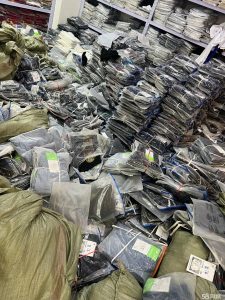
Selling kids’ clothing overstock at street stalls is a low-cost, low-risk way to start a business, and it is very popular among newbies and part-time sellers. However, many people do not know how to calculate the net profit, which leads to unclear accounts and even losses. In fact, calculating the net profit of selling kids’ clothing overstock at street stalls is very simple, as long as you master a basic formula and clarify all the costs involved. Today, we will teach you how to calculate the net profit step by step, combining real examples, to help you manage your business better.
First, let’s clarify the basic formula for calculating net profit: Net Profit = Total Sales Revenue – Total Cost. This formula is very simple, but you need to clearly define what “Total Sales Revenue” and “Total Cost” include. Let’s break down each part in detail:
Total Sales Revenue refers to the total amount of money you get from selling kids’ clothing overstock. It is calculated by multiplying the retail price of each product by the sales volume. For example, if you sell 80 pieces of kids’ clothing overstock at $2.8 per piece, your total sales revenue is 80 × $2.8 = $224. It’s important to record the sales volume and retail price clearly every day, so that you can calculate the total sales revenue accurately.
Total Cost refers to all the costs you incur in the process of selling kids’ clothing overstock at street stalls. It mainly includes four parts: purchasing cost, stall fee, shipping cost, and loss of unsellable defective products. Let’s explain each part in detail:
1. Purchasing Cost: This is the total cost of buying kids’ clothing overstock from suppliers. It is calculated by multiplying the purchasing price per piece by the total purchase volume. For example, if you buy 200 pieces of kids’ clothing overstock at an average cost of $0.7 per piece, your total purchasing cost is 200 × $0.7 = $140. When calculating the daily purchasing cost, you can divide the total purchasing cost by the number of days you expect to sell out the goods. For example, if you expect to sell 200 pieces in 5 days, your daily purchasing cost is $140 ÷ 5 = $28.
2. Stall Fee: This is the fee you pay for setting up a stall in a specific location, such as night markets, flea markets, or community squares. The stall fee varies according to the location and time, usually between $1.4-$7 per day. For example, a stall in a busy night market may cost $4.2-$7 per day, while a stall in a community square may cost $1.4-$2.8 per day. You need to include the daily stall fee in the total cost.
3. Shipping Cost: This is the cost of transporting the kids’ clothing overstock from the supplier to your stall. The shipping cost depends on the distance and the weight of the goods, usually between $1.4-$4.2 per batch. For example, if you buy 200 pieces of kids’ clothing overstock, the shipping cost may be $2.8. You can divide the total shipping cost by the number of days you expect to sell out the goods to get the daily shipping cost.
4. Loss of Unsellable Defective Products: No matter how carefully you select the goods, there will always be a small number of defective products that cannot be sold, such as severely faded, deformed, or damaged items. The defect rate of kids’ clothing overstock is usually between 5%-10%, so you need to deduct the cost of these defective products from the total cost. For example, if you buy 100 pieces of kids’ clothing overstock at $0.7 per piece, and 5 pieces are defective, the loss of defective products is 5 × $0.7 = $3.5. You can also divide this loss by the number of days you expect to sell out the goods to get the daily loss.
Now, let’s use a real example to calculate thenet profit of selling kids’ clothing overstock at street stalls. Suppose you buy 200 pieces of $1-$3 kids’ clothing overstock at an average cost of $0.7 per piece (total purchasing cost $140). You set up a stall in a night market with a stall fee of $4.2 per day. The shipping cost is $2.8 per batch. The defect rate is 5%, so the loss of defective products is $3.5. You expect to sell 80 pieces a day, and the retail price is $2.8 per piece.
Through this example, you can see that calculating the net profit is very simple. As long as you record all the costs clearly and calculate step by step, you can know how much money you make every day. It’s important to note that you should record your sales and costs every day, so that you can adjust your pricing and purchase volume in a timely manner according to the profit situation. For example, if the net profit is too low, you can increase the retail price appropriately or find a supplier with a lower purchasing cost. If the sales volume is too low, you can adjust the style or promotional strategy.