Can You Make Money with Small-Cost Kids’ Clothing Overstock?
One of the most common questions newbies ask when considering entering the kids’ clothing overstock industry is: Can I make money with small-cost kids’ clothing overstock? The answer is a definite yes. Small-cost kids’ clothing overstock is the best way for newbies to get started, as it has low investment, low risk, and quick returns. Today, we will use real cases and detailed data to prove that you can make money with small-cost kids’ clothing overstock, and teach you how to maximize profits with limited investment.
First, let’s clarify what “small-cost” means in the kids’ clothing overstock industry. Generally speaking, small-cost refers to a start-up capital of $140-$280, which is enough to buy a small batch of kids’ clothing overstock (100-300 pieces) to test the market. Unlike full-time business which requires thousands of dollars of investment, small-cost investment can be done by almost anyone, including students, housewives, and office workers who want to do part-time jobs.
The reason why small-cost kids’ clothing overstock can make money is that it has ultra-low purchasing costs and stable market demand. Kids’ clothing overstock is usually sold at 10%-30% of the full price, so the purchasing cost is very low. Even with a small investment, you can buy a certain number of products, and sell them at a reasonable retail price to get a good profit. For example, with $140, you can buy 200 pieces of low-priced kids’ clothing overstock at an average cost of $0.7 per piece. If you sell them at $2.8 per piece, you can get a total sales revenue of $560, and a net profit of $400 after deducting all costs — this is a very considerable return for a small investment.
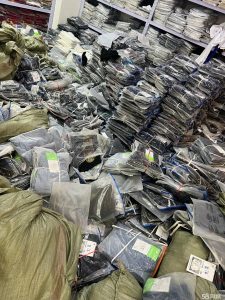
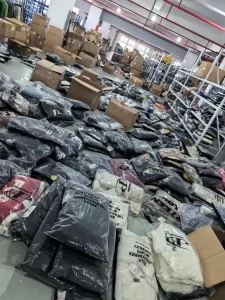
Let’s take a real case of a newbie who made money with small-cost kids’ clothing overstock. A college student in Shenzhen invested $140 to buy 200 pieces of $1-$3 kids’ clothing overstock (including T-shirts, shorts, and pants) from a factory clearance warehouse. He set up a stall in a night market near his school every weekend, selling 50-80 pieces a day at $2.8 per piece. His daily net profit is about $42-$70, and his monthly net profit is about $840-$1,400. This income is enough to cover his living expenses, and he doesn’t need to ask his parents for money. After 2 months, he recovered his initial investment and started to make stable profits.
Another case: a housewife invested $280 to buy 300 pieces of mid-priced kids’ clothing overstock (average cost $0.98 per piece). She sold them through community group buying and weekend stalls, selling 30-50 pieces a week. Her monthly net profit is about $1,260-$2,100, which can effectively supplement the family income. She didn’t need to quit her family duties, and just used her spare time to do the business, which is very suitable for housewives.
To make money with small-cost kids’ clothing overstock, you need to master three key skills: 1. Find reliable sources of goods. The quality and price of goods directly determine your profit. You should choose factory clearance warehouses or foreign trade overstock channels, skip middlemen, and get low-cost and good-quality goods. Avoid buying cheap and shoddy goods, which will affect sales and reputation. 2. Select the right styles. Focus on basic practical styles and cute cartoon styles that are popular among children, avoiding overly trendy or outdated styles. These styles are easy to sell and have a stable market demand. 3. Choose the right sales channel. For small-cost investment, street stalls, night markets, and community group buying are the best choices, as they have low or no additional costs and large customer flow.
It’s important to note that small-cost kids’ clothing overstock is not a get-rich-quick scheme. It requires patience and persistence. At the beginning, you may not sell a lot of goods, but as you accumulate experience and customer resources, the sales volume will gradually increase. You should also avoid blind stockpiling — start with small batches to test the market, and then increase the purchase volume according to sales. This can reduce the risk of overstocking and ensure that you can make stable profits.