Is the Wholesale Profit of Kids’ Clothing Overstock Higher Than Retail Profit?
Many people in the kids’ clothing overstock industry have a question: Is the wholesale profit of kids’ clothing overstock higher than retail profit? The answer is not absolute — it depends on the sales volume, profit margin, and operational capabilities of the seller. Today, we will compare the wholesale profit of kids’ clothing overstock and retail profit in detail, analyze their advantages and disadvantages, and help you choose the right business model according to your own situation.
First, let’s clarify the concepts of wholesale profit and retail profit. Wholesale profit refers to the profit obtained by selling kids’ clothing overstock in large quantities to other sellers (such as stall owners, physical store owners, and online sellers) at wholesale prices. The wholesale price is usually much lower than the retail price, so the profit per piece is relatively low, but the sales volume is very large. Retail profit refers to the profit obtained by selling kids’ clothing overstock directly to end consumers at retail prices, with a higher profit per piece but a smaller sales volume than wholesale.
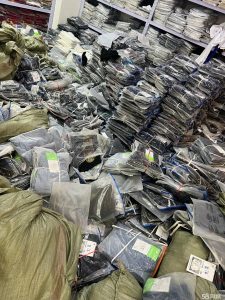
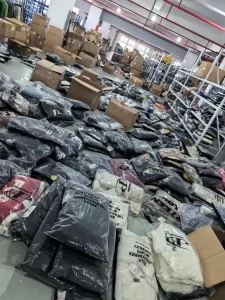
Let’s first analyze the wholesale profit of kids’ clothing overstock. The wholesale profit per piece of kids’ clothing overstock is usually between $0.14-$0.7, which is much lower than the retail profit ($0.7-$8.3 per piece). The reason for the low profit per piece is that the wholesale price is close to the purchasing cost — wholesale sellers need to leave a reasonable profit space for retail sellers, so they can only get a small profit per piece. However, the advantage of wholesale is the large sales volume. A single wholesale order can reach thousands or even tens of thousands of pieces, so the total wholesale profit is still considerable.
For example, a wholesale seller buys 10,000 pieces of low-priced kids’ clothing overstock at an average cost of $0.7 per piece (total purchasing cost $7,000). He sells them to stall owners at a wholesale price of $0.98 per piece, with a wholesale profit of $0.28 per piece. If he sells all 10,000 pieces, his total wholesale profit is $0.28 × 10,000 = $2,800. Although the profit per piece is only $0.28, the total profit is very high due to the large sales volume. This is the core advantage of wholesale — low single profit, high total profit.
Next, let’s analyze the retail profit of kids’ clothing overstock. As we mentioned earlier, the retail profit per piece is between $0.7-$8.3, which is much higher than the wholesale profit per piece. For example, a retail stall owner buys 200 pieces of low-priced kids’ clothing overstock at $0.7 per piece (total purchasing cost $140). He sells them at $2.8 per piece, with a retail profit of $2.1 per piece. If he sells all 200 pieces, his total retail profit is $2.1 × 200 = $420. Although the total profit is lower than that of wholesale, the profit per piece is 7.5 times that of wholesale.
Now, let’s compare the two profit models: Is the wholesale profit of kids’ clothing overstock higher than retail profit? It depends on the sales volume. If you can get large wholesale orders (thousands or tens of thousands of pieces), the total wholesale profit will be higher than the total retail profit. For example, selling 10,000 pieces at a wholesale profit of $0.28 per piece brings a total profit of $2,800, while selling 10,000 pieces at a retail profit of $2.1 per piece brings a total profit of $21,000 — but it is very difficult for retail sellers to sell 10,000 pieces in a short time. For most sellers, especially newbies, it is easier to achieve small-scale retail sales than large-scale wholesale sales.
In addition, wholesale and retail have different requirements for operational capabilities. Wholesale requires you to have a large storage space, stable sources of goods, and the ability to find and maintain wholesale customers (such as stall owners and physical store owners). You also need to have certain bargaining power to get low purchasing costs and set reasonable wholesale prices. Retail requires you to have good sales skills, the ability to select popular styles, and the ability to manage sales channels (such as street stalls, physical stores, or live streaming).
For newbies, it is not recommended to start with wholesale. Because wholesale requires a large amount of investment (to buy goods in large quantities), and the risk is higher — if you can’t find wholesale customers, the goods will be overstocked, leading to losses. It is better to start with retail, accumulate experience in selecting goods, pricing, and sales, and then expand to wholesale when you have stable sources of goods and customer resources. For experienced sellers with large storage space and customer resources, wholesale can be a good way to expand business and increase total profit.
In conclusion, the wholesale profit per piece of kids’ clothing overstock is lower than retail profit, but the total profit can be higher if the sales volume is large. Whether wholesale profit is higher than retail profit depends on your operational capabilities and sales volume. Newbies should start with retail, while experienced sellers can consider wholesale to expand business. The best way is to combine wholesale and retail, using retail to stabilize daily income and wholesale to increase total profit.