Can You Make Money by Selling Kids’ Clothing Overstock with Small Profit but High Sales?
Small profit but high sales is a classic business model in the retail industry, and it is also the core model of most kids’ clothing overstock sellers. But many newbies are worried: if the profit per piece is very thin, can they really make money? Today, we will thoroughly analyze the feasibility of selling kids’ clothing overstock with small profit but high sales, combine real cases to prove its profitability, and teach you how to implement this model successfully.
First, let’s clarify the core logic of small profit but high sales: reduce the profit per piece, lower the retail price to attract more customers, and rely on large sales volume to accumulate total profit. This model is especially suitable for kids’ clothing overstock because of two reasons: first, kids’ clothing has strong rigid demand, and parents need to buy new clothes frequently, which provides a foundation for high sales volume. Second, kids’ clothing overstock has ultra-low purchasing costs, which allows sellers to reduce the profit per piece while still ensuring a reasonable profit space.
Many newbies have a misunderstanding: they think that only high profit per piece can make money. But in fact, for kids’ clothing overstock, small profit but high sales is more feasible and stable. Because the retail price of kids’ clothing overstock is already very low, if you set a high profit per piece, the retail price will be close to full-priced kids’ clothing, which will lose the price advantage and reduce sales volume. On the contrary, if you reduce the profit per piece and lower the retail price, you can attract more price-sensitive parents, increase sales volume, and finally get higher total profit.
Let’s take a real example to illustrate. Suppose you have two options for selling low-priced kids’ clothing overstock: Option 1: Set a high profit per piece — purchasing cost $0.7 per piece, retail price $4.2 per piece, profit per piece $3.5. If you sell 30 pieces a day, your daily total profit is $105. Option 2: Set a low profit per piece — purchasing cost $0.7 per piece, retail price $2.8 per piece, profit per piece $2.1. If you sell 80 pieces a day, your daily total profit is $168. It’s obvious that Option 2 (small profit but high sales) brings higher total profit. This is the magic of small profit but high sales — the profit per piece is thin, but the total profit is higher due to the large sales volume.
Another real case: a stall owner in Shanghai focuses on selling kids’ clothing overstock with small profit but high sales. He buys low-priced kids’ clothing overstock at an average cost of $0.4 per piece, and sells them at $1.4 per piece, with a profit per piece of only $1.0. But he sells 200-300 pieces a day, so his daily total profit is $200-$300, and his monthly net profit is $6,000-$9,000. This income is much higher than that of stall owners who pursue high profit per piece but low sales volume.
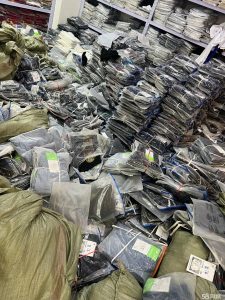
To successfully implement the model of selling kids’ clothing overstock with small profit but high sales, you need to master four key points: 1. Control the purchasing cost. The lower the purchasing cost, the more room you have to reduce the profit per piece and lower the retail price. You should prioritize connecting with factory clearance warehouses and foreign trade overstock channels, skip middlemen, and get the lowest possible purchasing price. 2. Choose the right sales channel. Street stalls, night markets, flea markets, and online platforms with large traffic are the best choices, as they can help you achieve high sales volume. 3. Select popular styles. Focus on basic practical styles and cute cartoon styles that are popular among children, which are easy to sell in large quantities. 4. Use promotional strategies. You can use strategies such as “buy two get one free”, “three pieces for $7”, or “lowest price guarantee” to attract customers and boost sales volume.
It’s important to note that small profit but high sales does not mean “no profit”. You must ensure that the profit per piece is positive, and deduct all additional costs (such as stall fees, shipping costs, and defective product losses) to get a reasonable net profit. For example, if the profit per piece is $1.0, and the daily sales volume is 200 pieces, your daily total profit is $200. After deducting the stall fee of $4.2, shipping cost of $2.8, and defective product loss of $3.5, your daily net profit is $189.5, which is still very considerable.
Another advantage of small profit but high sales is that it can help you accumulate a large number of customers. Because the price is affordable, customers are more willing to buy, and they may become repeat customers or recommend your products to their friends and relatives. This can help you build a stable customer group, ensure long-term high sales volume, and achieve stable profits.